

For much of the Space Age, space power was viewed primarily through a technical lens. Success was measured in satellites launched, payloads delivered, and capabilities fielded. The professionals most closely associated with the domain were engineers, scientists, operators, and acquisition specialists responsible for developing and employing increasingly sophisticated space systems.
Today, however, the strategic environment has changed. The United States increasingly relies on allies, partners, commercial providers, and multinational organizations to achieve its objectives in the space domain. Space situational awareness agreements, Combined Space Operations (CSpO) initiatives, multinational exercises and partner capacity-building efforts have become central components of modern military space strategy. As a result, the ability to build and sustain international relationships has become a critical element of space power.
This evolution raises an important question: What role do foreign area officers (FAOs) play in a domain that transcends conventional geographic boundaries?
The answer is evident within the space enterprise itself. While space may transcend geography, space power does not. The ability to achieve national objectives in space depends upon access, partnerships, agreements, and cooperation among nations. As international engagement becomes central to space operations, the skills long associated with FAOs are becoming increasingly relevant to the future of space power.
The growing number of FAOs assigned to U.S. Space Command (USSPACECOM) provides a useful example of how established security cooperation expertise is being applied to space-related challenges. While typically employed as specialists supporting geographic combatant commands, FAOs are now contributing to a unified combatant command whose missions extend beyond regional boundaries and into new areas of cooperation, including dual-use technology partnerships and commercial integration. This development reflects a broader reality: The character of space power depends not only on technological superiority but also on cross-regional relationships and specialized expertise that enable international cooperation beyond the established FAO expertise framework.
Internationalizing space power
The early Space Age was characterized largely by competition between nation-states. The U.S. and the Soviet Union pursued national security objectives through independent programs, with limited international integration beyond select partnerships in the space science sector.
The contemporary environment is markedly different. Modern space operations depend upon an increasingly interconnected network of military, commercial, civil, and international stakeholders. The United States routinely collaborates with allies and partners to improve space domain awareness, strengthen interoperability, share information and develop common approaches to responsible behavior in space.
International initiatives and operations, such as the CSpO initiative and Multinational Force-Operation Olympic Defender, illustrate the extent to which coalitions have become embedded within modern space strategy. International participation in major space exercises and planning efforts also continues to expand as nations recognize the growing importance of the domain to economic prosperity and national security.
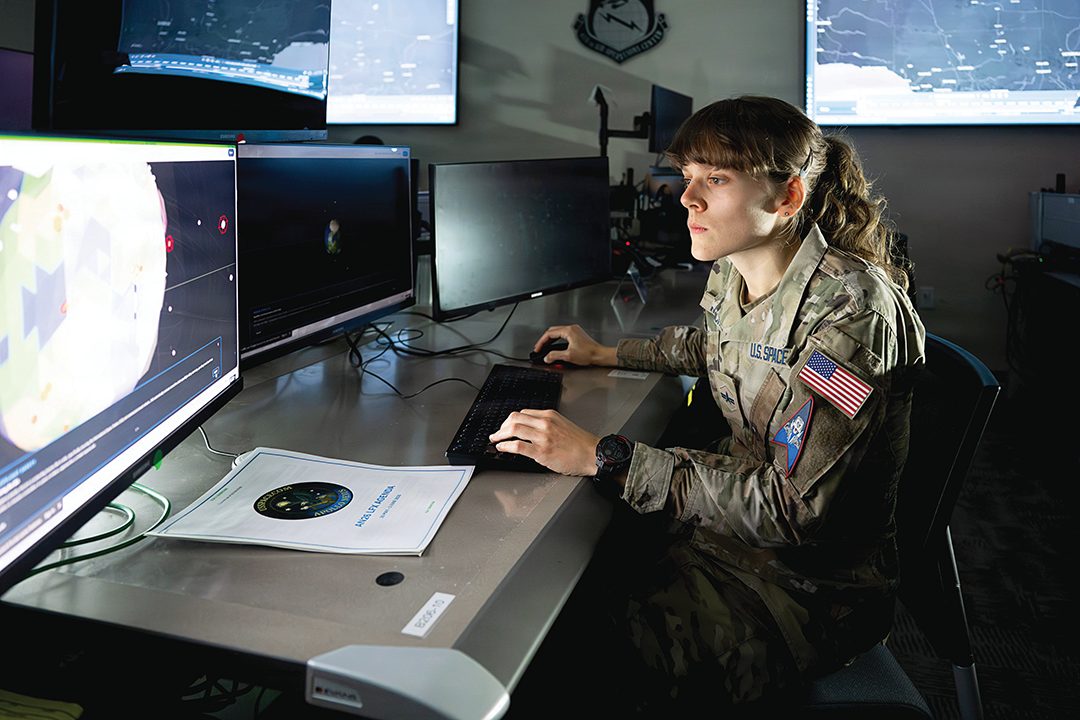
At the same time, commercial providers have transformed the space industry. Private companies operate globally, serve multinational customer bases, and frequently partner with governments across multiple areas of responsibility (AOR). Emerging spacefaring nations are developing domestic capabilities while seeking opportunities to collaborate with more established space powers. The result is a cross-domain strategic environment in which relationships matter as much as technology.
Building and maintaining those relationships requires expertise that extends beyond the operational employment of space systems. It requires an understanding of political dynamics, regional interests, security cooperation authorities, and partner-nation priorities. These competencies have long formed the foundation of the FAO community.
Security cooperation expertise
Historically, FAOs have served as specialists supporting geographic combatant commands, embassies and security cooperation organizations. Their primary value is exemplified by their ability to connect strategic objectives with international relationships. Space-focused organizations require the same expertise, with the added challenge of linking multiple theaters, regions, and AORs toward a common purpose.
As international engagement in the space domain becomes embedded in all three levels of warfare (tactical, operational, and strategic), commanders face challenges that are often political rather than technical. Developing partner capacity, establishing information-sharing arrangements, coordinating multinational activities, and building consensus around shared objectives all require understanding the international environment.
These efforts are not peripheral to space operations. Rather, they are increasingly central to them.
A nation may possess advanced space capabilities, but partnerships significantly enhance the effectiveness of those capabilities. Likewise, opportunities for cooperation often depend upon relationships cultivated over years of engagement and mutual trust.
Ultimately, the growing role and importance of security cooperation within the space domain reflects a broader reality: Space power is dependent upon human networks as well as technical networks.
Partnerships forge effectiveness
To many, security cooperation often has been viewed as an enabling activity within geographically defined areas. Exercises, military exchanges, and partner-nation engagements helped create favorable conditions for military operations but were generally considered separate from the operational mission itself.
While there certainly was truth in that conventional wisdom, today’s space domain challenges the notion.
International partnerships in the space domain contribute directly to mission effectiveness. Information-sharing agreements improve space domain awareness. Combined planning efforts strengthen interoperability. Partner-nation capabilities enhance resilience and expand operational reach. Commercial and allied partnerships provide access to data, services, and infrastructure that would be difficult for any nation to replicate independently.
In this environment, international engagement is no longer adjacent to space operations — it is becoming an integral component of them.
This reality is particularly evident within USSPACECOM’s expanding engagement efforts. As allies and partners develop their own space capabilities, opportunities for collaboration continue to grow. Building these relationships requires sustained engagement, an understanding of regional priorities, and the ability to translate strategic objectives into mutually beneficial partnerships throughout the competition spectrum.
These are the core competencies in which FAOs excel. As space security cooperation becomes more important to deterrence, resilience, and operational effectiveness, FAO expertise in both international engagement and space power constitutes a force-multiplying strategic capability for the joint force.
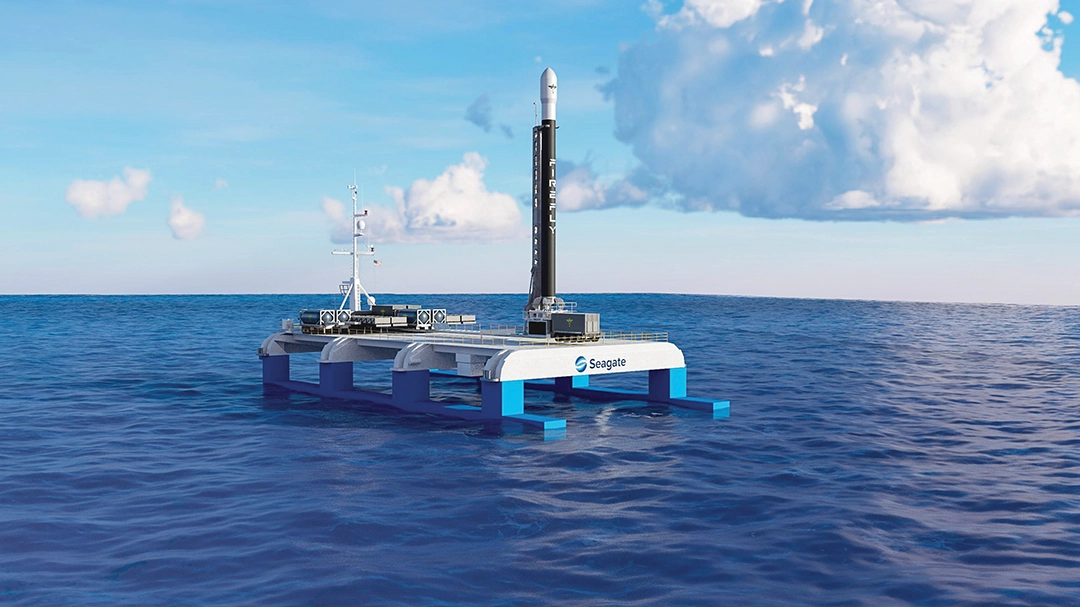
[SEAGATE SPACE]
Case study: sea launch
One emerging development highlights this reality and demonstrates the particular importance of Navy FAOs working in the space domain.
Growing demand for launch services, concerns regarding the vulnerability of fixed infrastructure and the need for responsive launch capabilities have renewed interest in sea-based launch systems. Commercial firms and government organizations alike are exploring offshore launch concepts as a means of increasing flexibility, improving resilience, and expanding access to space.
As global launch demand increases, existing launch infrastructure will continue to face availability constraints. At the same time, military planners recognize the risks associated with concentrating launch capabilities at a limited number of fixed locations.
Sea-based launch offers a potential solution. However, maritime launch infrastructure introduces challenges that extend beyond engineering and operations.
Unlike fixed launch facilities located within national borders, maritime launch platforms operate within a complex environment governed by international law, politics, maritime commerce, environmental considerations, and diplomatic relationships. Questions of access, logistics, support infrastructure, and operational freedom inevitably arise.
Where will these platforms operate? Which nations will provide access to ports and maintenance facilities? What agreements will be necessary to sustain operations during competition or conflict? How will launch activities affect commercial shipping and national stakeholders?
These questions cannot be answered solely through engineering or operational planning. They require diplomacy, negotiation, and security cooperation.
In many respects, sea-based launch represents a convergence of the maritime and space domains, as well as the commercial sector’s growing role in dual-use capabilities. The technology may focus on access to orbit, but the enabling conditions remain rooted in geography, politics, and international relationships with military and commercial partners.
Need for space FAOs
Not surprisingly, the evolution of the space domain challenges assumptions regarding FAO employment and requires an expansion beyond the legacy regional mindset embedded within the FAO community.
For decades, security cooperation specialists and FAOs have been defined primarily by geographic specialization. Their expertise has been linked to specific areas, languages, and cultures. While these competencies remain essential, the space domain introduces a more functional dimension to international engagement.
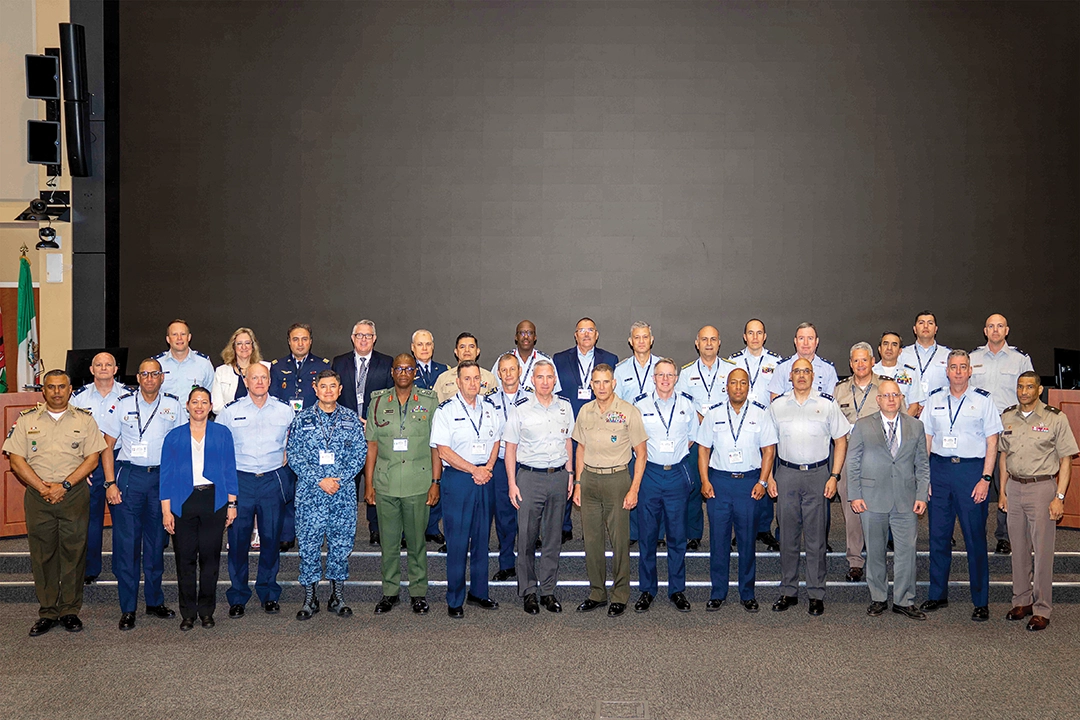
By its very nature, space activities span continents, countries, and oceans. A single initiative may involve allies from Europe, partners in the Indo-Pacific, commercial providers headquartered in North America, and international organizations operating globally. Managing these relationships requires an ability to connect regional expertise to broader strategic objectives.
This does not eliminate the importance of geographic knowledge; rather, it expands the context in which that knowledge is applied.
The establishment and growth of FAO assignments at USSPACECOM illustrate that security cooperation efforts require officers who can operate across organizational and geographic boundaries. These officers serve as integrators between regional relationships and functional objectives, translating partnerships into strategic advantage.
In many respects, this evolution mirrors broader trends across the joint force. As emerging domains become increasingly interconnected, the value of professionals who can bridge operational and diplomatic communities will continue to increase.
Broader challenges
Space power is often described as a global enterprise. Increasingly, it is also an international enterprise consisting of dual-use technology and commercial integration.
Alliances, partnerships, information-sharing agreements and security cooperation initiatives have become essential components of modern space strategy. Emerging developments such as sea-based launch systems further demonstrate that access to space depends not only on technology but also on the political and diplomatic conditions that enable its use.
The assignment of FAOs to USSPACECOM reflects this reality. It demonstrates that the challenges confronting the space enterprise increasingly extend beyond technical problem-solving and into the realm of international engagement, partner development, and strategic cooperation.
These realities demonstrate that space power requires more than operators, engineers, and analysts. It also requires security cooperation professionals who can navigate the international environment, building enduring partnerships and translating strategic relationships into operational opportunities.
FAOs have performed exactly those functions across the globe within a regionally focused framework. As space becomes more dependent upon international cooperation, dual-use technology and commercial integration across and beyond terrestrial areas of responsibility, FAOs’ contributions become as critical in the astrographic domain as they long have been in the land, maritime and air domains.