


The mission of one expanding Japanese satellite system can be described simply: strengthen the vital GPS navigation constellation operated by the United States.
But there’s nothing simple about the sweeping changes the QZSS system promises to deliver in day-to-day life for mobile phone users from Japan to New Zealand. QZSS, or the Quasi-Zenith Satellite System, provides reliable positioning information down to a centimeter and, in combination with a mobile mapping system, enables a host of new and improved businesses and services, Mitsubishi Electric said on its website. Examples include automated driving, disaster prevention and infrastructure maintenance.
These satellites hover nearly overhead in Japan, the zenith of their tilted orbit, ensuring that signals penetrate deep into urban canyons and forested mountains where standard GPS — coming in at an angle — often is blocked. To stay on station, each quasi-zenith satellite cycles by every seven hours in an orbit that looks from the ground like a north-to-south figure eight, with the top loop smaller than the bottom. The forthcoming launch of the seventh and final piece means users can access four of the satellites at a time for better service.
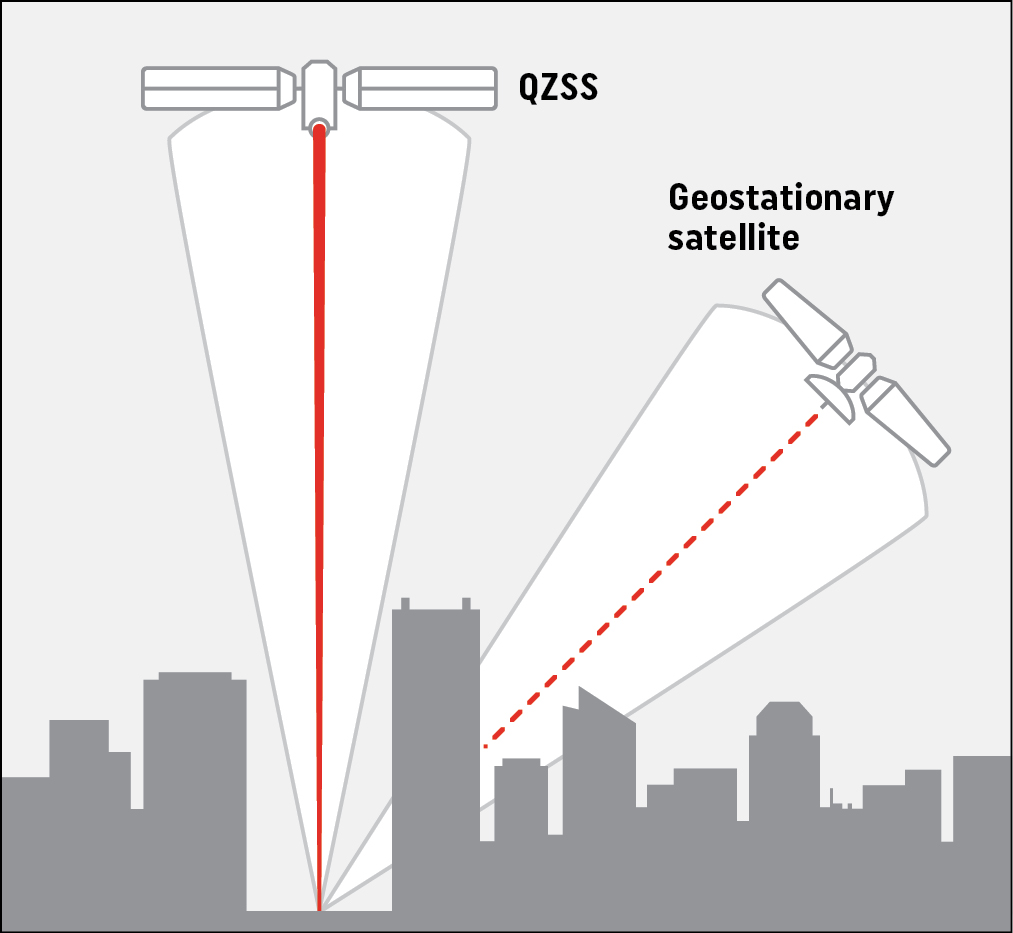
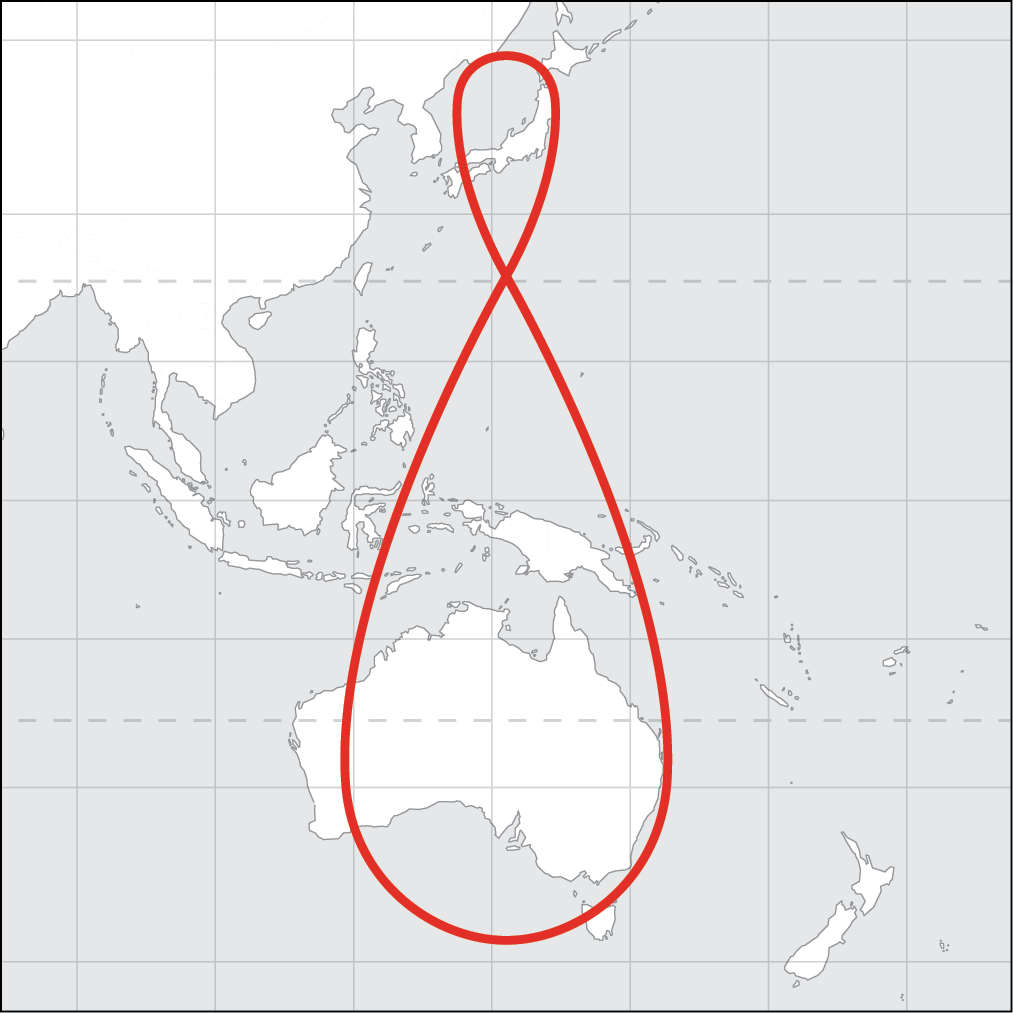
QZSS is a case study in the advantages of dual-use satellites — spacecraft that can serve both civilian and military needs. Once limited to large, expensive, purpose-built machines, militaries now share room with a growing proliferation of private satellites to take advantage of the innovation and efficiency that comes with a market-driven approach.
For the space industry, dual-use satellites bring in a reliable, paying, government customer. “That is where the funding is, not because that’s the key driver for many of these companies’ ambitions, but because that’s where the funding is,” one stakeholder in the Indo-Pacific region explained to the Rand Corp. think tank during a series of virtual dual-use workshops.
But with advantages come risks: the potential for threats to and from these hybrid military systems, and just as important, from the way nations interpret one another’s dual-use capabilities. “This inherent duality, where the same satellite can serve peaceful and militaristic roles, could make satellite activities difficult for governments, militaries, and commercial operators to interpret,” said a summary of “Navigating Duality in Space,” a June 2026 Rand report. “As a result, these observers could misread potentially benign behaviors as threatening.”
Spacefaring nations from Australia to the United Arab Emirates are wrestling with this ambiguity as part of broader discussions about how to coexist in space. “The lens through which the global community is looking at space is increasingly security-related,” said Heather Pringle, CEO of the nonprofit Space Foundation and a retired U.S. Air Force major general, speaking on “The Space Policy Show” podcast in April 2026.
Nations are raising more and more questions about whether satellite systems described as civil in nature are in reality up to something else. The polar regions are an example.
Norway’s Svalbard archipelago in the Arctic Sea is home to a commercial satellite ground station with more antennas than any place on Earth. Polar orbits are a crossroads for satellites providing weather data, Earth observation and other information, and polar stations enable frequent contact and rapid data return. Routinely, the Russian Ministry of Foreign Affairs accuses neighboring Norway of violating the 1920 Svalbard Treaty, saying in 2025 that Norway showed “blatant disregard” for the treaty’s demilitarization provisions and singling out “dual-purpose facilities.” Norway dismisses the complaints, saying it can use the 170 radio domes of the SvalSat station as it chooses because they’re on sovereign Norwegian land.

At the other end of the globe, the U.S. military said in its 2024 China Military Power report that Chinese research satellite stations in Antarctica could be turned toward military surveillance and intelligence — even though they are “ostensibly used for legitimate scientific research.”
The military side of a dual-use satellite is often classified, but with Japan’s QZSS, potential applications are many, according to analysis by Scott Foster, a correspondent for independent Hong Kong-based news site the Asia Times. These include communication channels that resist cyberattacks, a standalone targeting system, a backup for GPS that is locally more accurate than the U.S. system, guidance for military aviation, land and maritime navigation, vehicle tracking and fusion with other constellations.
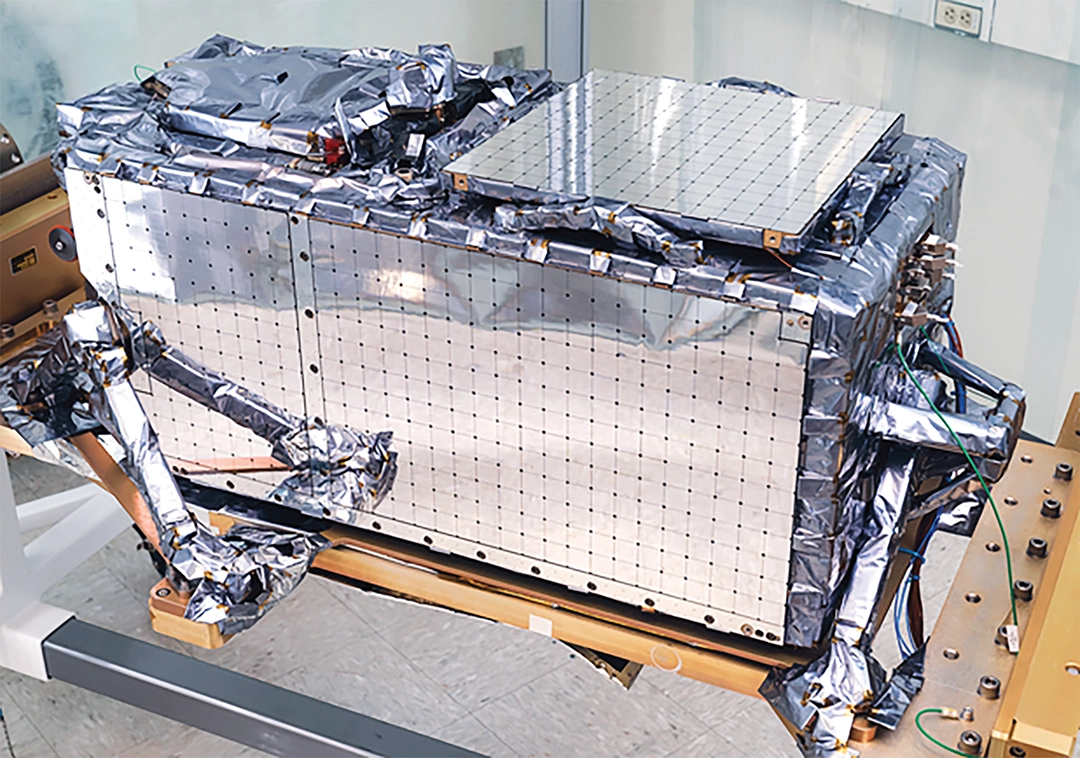
What’s more, QZS-6 and QZS-7 each carry a separate, adjacent military payload under a partnership between JAXA, the Japan Aerospace Exploration Agency, and the U.S. Space Force. The payloads will keep tabs on spacecraft and dangerous debris in geosynchronous orbit and contribute data to the Space Surveillance Network operated by the Space Force.
After the launch in Japan of QZS-6 in February 2025, the Space Force noted how these two hosted payloads will help warfighters in the U.S. Pacific Command and across the Department of Defense (now the Department of War). “In an increasingly contested space domain, Japan’s contribution to the U.S. DoD’s deterrence strategy has been, and will continue to be, key to [the command’s] awareness and operations,” Col. Bryon E.C. McClain with the service’s Space Systems Command said then.
These classifications include traditional operations such as launch and satellite communications as well as newer functions like space traffic management and active debris removal. A table in one Rand report lists each capability with both civilian and military applications side by side for comparison.
One example is rendezvous and proximity operations, described in the table as “Maneuvering spacecraft to approach and interact with other on-orbit objects.” Possible civil application: “Satellite servicing, docking with space stations.” Possible military application: “Intelligence gathering, disabling or manipulating adversary satellites.”
That the same satellite can be seen as serving either benign or aggressive goals, perhaps even hiding one with the other, explains why the Rand project focuses on establishing international norms and procedures for dual-use resources.
“If military users deliberately hide within commercial constellations, adversaries may conclude that a wider set of commercial satellites, ground stations and data links are contributing to military operations, thereby broadening perceived target sets and increasing risks for civilian operators,” Bruce McClintock, senior researcher and Rand Space Enterprise Initiative lead, told Apogee in an email interview. “Our research concluded that observers often cannot reliably distinguish civilian from military use and therefore should manage risk through both behavior- and effect-based approaches,” or approaches that focus on what systems are doing in practice, rather than less-observable characteristics like intent.

Comparisons have been drawn between a satellite and a knife — a knife being a tool to slice bread for a meal or to stab someone in the commission of a crime. One example in space, the Rand report said: “States cannot determine from a GPS satellite’s observable behavior whether the data will support civilian applications or bolster border security, since the satellite will behave the same way in both scenarios.” And another: How can you know what a debris-removing space claw or magnet is really up to, “repositioning a defunct satellite or interfering with a functioning adversary satellite”?
One benefit of pairing commercial and military capabilities is transparency. Commercial imagery not subject to military secrecy classification, for example, revealed to the world a massing of Russian ground forces just before the February 2022 invasion of Ukraine. “Deterrence by exposure,” McClintock said, and it contributes to improved stability. Still, he said, the research shows that this stabilizing effect is conditional because data that’s easy to share is also easy to fold into military operations, “and the inability to distinguish civilian from military effects can make operators and constellations appear targetable.”
The research showed there are many ways for one nation to interpret another nation’s behavior in space. By some estimates, as many as 90 nations are operating in the domain. Rand even found varying views on how to define a dual-use satellite, so agreement on how to deal with them presents a greater challenge still. Points of divergence arise “between nations with advanced space capabilities and those with emerging ones, between civilian and military actors, and between government and industry,” according to the “Navigating Duality in Space” report.
The best path forward, according to the report’s conclusion, is to establish frameworks based on concrete, observable activity, such as maneuvers in space, or on data derived on Earth from space-based systems. In other words, do not rely solely on factors such as presumed intent, user identity, or technical design because such factors might be unknowable. And consider moving away from formal labels, such as commercial and military. “A pragmatic, behavior- and effect-based framework could involve measures to advance transparency, trust, and confidence-building and promote responsible, predictable activities in space,” the report said. This may lead to “mechanisms or a governance regime analogous to those in other domains, although their eventual shape remains uncertain.”

McClintock told Apogee, “Our current research is working to identify gaps in the governance of space systems and the data indicates that commercial entities, national governments and eventually international institutions should focus more on clear authorities, command relationships, data rights, and access arrangements now rather than waiting on a future crisis.”
Despite these risks, no clear international norms or governance regime exists. Rather, governance is broadly informal, composed of a patchwork of policies, laws, statements, dialogues, or international engagements.
The Rand report divides the 20 nations it selected for its report into three categories. The first observes what Rand calls an implicit form of governance: those engaged in discussions about dual use. They typically partake in one or both of the top international forums on space: The United Nations Committee on the Peaceful Uses of Outer Space and the U.N. Open-Ended Working Group on Reducing Space Threats Through Norms, Rules and Principles of Responsible Behaviours. Many have also signed onto the U.S.-led Artemis Accords guiding civil space exploration and cooperation, and the 10-nation military alliance known as the Combined Space Operations initiative.
A second category in Rand’s assessment is called ambiguous, a form of governance that blurs or obscures the distinction between civilian and military use and avoids clear definitions or separation of dual-use space systems. The nations in this category include the People’s Republic of China, Russia, and Iran. A third category is labeled explicit: Clear, codified policies defining dual use and differentiating between civilian and military use. None of the 20 countries that Rand researched has achieved this level of clarity.
One path toward clarity, according to the report, is prioritizing progress over consensus and ensuring participation from nations with space capabilities both broad and narrow. This could include nations focused on commercial ventures and innovation, like Luxembourg and the United Arab Emirates, and states with geopolitical significance, such as Scandinavian countries dealing with Arctic security challenges.
Technologies are advancing faster than the norms or mechanisms established to avoid unintended misunderstandings or escalation, the report said.
“Our latest research finds a broad trend toward more hybrid or public-private relationships,” McClintock said. “The degree varies depending on the region. We observed highly integrated commercial models in the United States, Canada, France, Germany, and the U.K. to more state-driven or centralized approaches in countries like China.”