

India launched Operation Sindoor on May 7, 2025, striking what it described as terrorist infrastructure in Pakistan and Pakistan-administered Kashmir in retaliation for a militant attack that killed 26 people in the popular tourist town of Pahalgam. Four days of fighting between the two nuclear-armed neighbors followed, ending in a cease-fire on May 10. Indian officials later alleged that China had supplied Pakistan with real-time information on Indian military positions during the fighting, which involved heavy artillery, missile, and drone attacks.
The conflict highlighted gaps in India’s ability to collect satellite imagery and deliver actionable intelligence before targets could move, compounded by the limitations of optical imaging at night and through cloud cover. Radar satellites can overcome those obstacles, but persistent collection and rapid processing remain mission-essential.
Pakistan’s surveillance capabilities are also expanding. Between January 2025 and April 2026, the country launched six Earth observation satellites, most aboard Chinese rockets. For India, the larger concern than Pakistan’s growing constellation is the issue of the major space power supporting its nuclear-armed neighbor. As of October 18, 2026, Orbital Radar’s live catalogue listed China’s active fleet at 1,326 active satellites, including 322 Earth observation spacecraft.
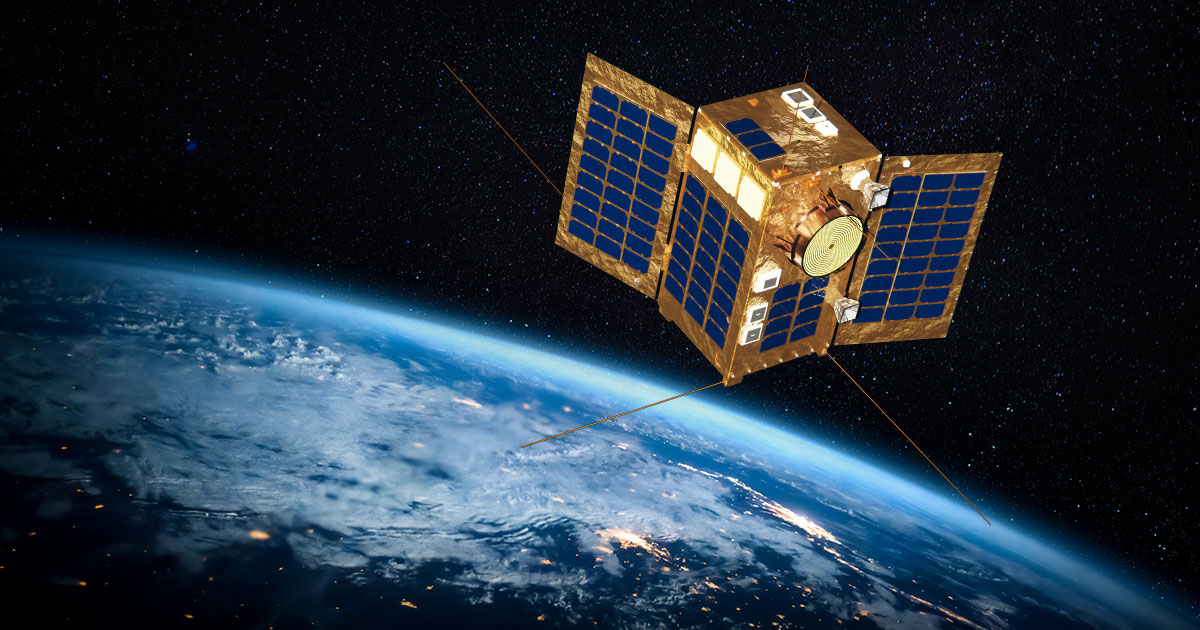
India’s private sector aims to narrow that surveillance gap by deploying an autonomous intelligence, surveillance, and reconnaissance (ISR) satellite constellation beginning in 2027.
Leading this effort is Kepler Aerospace, a Bengaluru start-up co-founded by Navneet Singh and Kiran Sharma in 2018. The company is designing an autonomous satellite swarm capable of coordinating its operations in orbit.
Kepler says its proposed constellation could shorten the time from detection to actionable intelligence. Speaking at the India Today Conclave in October, Singh, who also serves as Kepler’s CEO, contrasted China’s claimed ability to revisit certain targets every eight minutes with an Indian revisit interval of about 45 days.
“India has Earth observation (EO) satellites and the capability to obtain satellite imagery. The challenge lies in obtaining it frequently enough and processing it quickly enough to support military operations,” Ashwin Prasad Rao, a staff research analyst with the Takshashila Institution’s Military Technology and Space Program in Bengaluru, India, told Apogee.
“Autonomous constellations can help address this problem,” he added.
Closing the Intelligence Gaps
India’s space intelligence infrastructure suffers from fragmented providers, sequential workflows, and poor coordination, Kepler argues on its website. All this results in, the company says, high-quality data that rarely translates into timely decision-making.
Kepler’s proposed constellation would operate as a swarm across multiple orbits, combining optical and radar imagery with EO (electro-optical), RF (radio frequency), SAR (synthetic aperture radar), and IR (infrared) sensing to monitor areas of interest.
According to Kepler, autonomous coordination could reduce the need for operators to schedule each observation manually and allow satellites to respond more quickly upon detecting something of interest.
Kepler says its satellites would automatically detect radio frequency signals, movement, or changes in temperature — anything that warrants closer observation — then alert others in the constellation to photograph and track the activity. This coordinated response, the company says, would enable it to deliver “consolidated and processed intelligence” within minutes.
The company describes its proposed system as the world’s first autonomous swarming satellite architecture for ISR. The technology is very promising—and exciting. In practice, however, its actual effectiveness remains unproven.
Prasad said an autonomous satellite swarm “can detect changes in troop deployments, new military infrastructure, or equipment movements, and coordinate follow-up observations among themselves,” but he cautioned that “a six-satellite constellation cannot provide uninterrupted coverage of the entire border.”
Kepler has plans to launch its first six autonomous satellites in December 2027, following an $8 million funding round it secured in September 2026. The initial deployment could demonstrate the system’s capabilities, but uninterrupted border coverage would require a much larger constellation.
A Critical Need
India has used satellites for border surveillance and military intelligence for 25 years, amid tensions with China and Pakistan. Its capabilities span optical imaging, radar imaging, and electronic intelligence, Prasad told Apogee. The challenge is obtaining and delivering that intelligence at the speed military operations demand it.
“India does not need to match China in the number of satellites, ” Prasad said. “Its immediate priority should be to achieve reliable and sufficiently frequent surveillance of strategically important areas, such as its borders and the Indian Ocean region.”
Autonomous constellations such as Kepler’s could help address specific operational gaps, he added. Cooperation with the United States and other partners could also help strengthen information-sharing as India expands its surveillance reach.
But satellites alone will not close the intelligence gap. As Prasad noted, “continued investment in the number of satellites, sensors, communications, and intelligence processing will remain essential for India.”