

U.S. Space Command (USSPACECOM) is preparing to execute Apollo Maneuvers 2026 (AM-26), a landmark “live fly” campaign designed to fundamentally shift how the nation and its allies operate in the space domain.
As adversary counterspace capabilities rapidly advance, the Department of War is deliberating the move away from the predictable, static orbital operations of the past. Under the strategic direction of Gen. Stephen N. Whiting, commander of USSPACECOM, AM-26 will serve as the premier campaign to mature sustained space maneuver (SSM) and dynamic space operations (DSO) across multiple orbital regimes.
For decades, space operations were defined by positional architecture — satellites launched into precise orbits where they remained, largely static, until their fuel was exhausted. Today, Whiting is pushing the force to adapt to the changing charter of war, recognizing that legacy military and institutional processes must evolve to maintain space superiority. Whiting has championed SSM and DSO as the future of space warfare.
AM-26 will stress test maneuver warfare theories in real time. “We must demonstrate the resolve and capability to maneuver decisively within the space domain,” Whiting noted in his planning guidance. The goal of this exercise is to refine joint and combined dynamic space operations, thereby ensuring the security of vital assets.
Staff efforts behind AM-26
Demonstrating a mature capability to maneuver decisively in space is not simply a technical challenge; it also demands a fundamental shift in institutional mindset across the entire USSPACECOM staff.
Transitioning from the predictable, static paradigms of the past to dynamic space operations requires every directorate to rethink its core processes. This need for cultural and operational evolution is why Whiting has designated the Joint Force Development and Training Directorate to lead the planning, synchronization and post-maneuver analysis, backed by a fully integrated joint staff.
Integrating Operation Olympic Defender partners
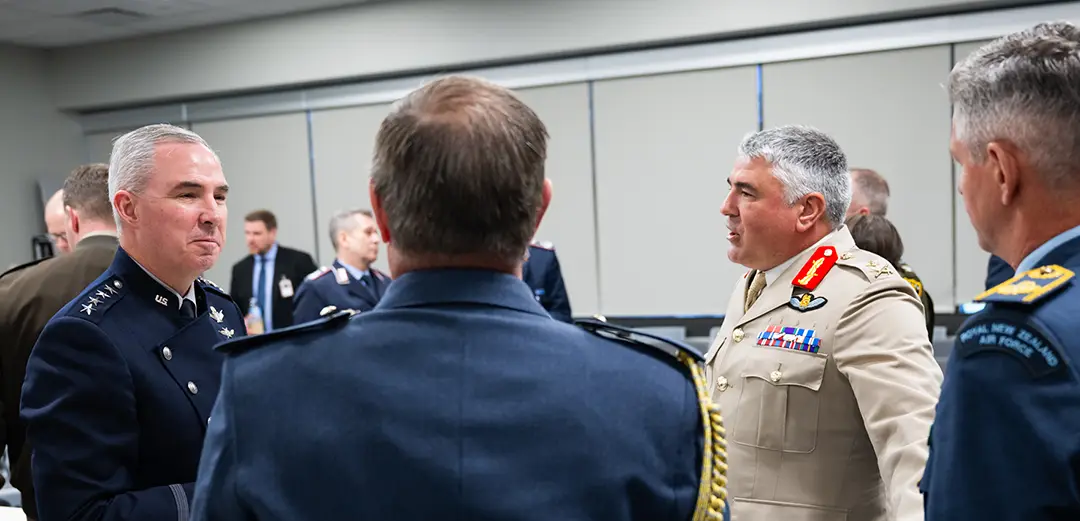
A cornerstone of USSPACECOM’s strategic advantage is its robust network of international alliances. AM-26 is not a unilateral demonstration; it is a coalition campaign. Partner nations from the Multinational Force-Operation Olympic Defender (MNF-OOD) are being integrated into every phase of the planning, coordination and execution of AM-26.
Partner nation liaison officers are working side by side with U.S. planners at Peterson Space Force Base to align allied operational capabilities with the campaign’s objectives. By incorporating allied sensing, tracking and operational planning frameworks, AM-26 will validate a shared, multinational baseline for maneuver warfare. This collective effort sends a powerful, visible deterrent signal to global competitors: The defense of the space domain is a collaborative, allied responsibility.
The road to live-fly execution
As planning concludes, the command is preparing to execute a phased operational scheme. The synchronization of AM-26 with ongoing area-of-responsibility activities will enhance the operational flexibility of USSPACECOM and its MNF-OOD partners.
This exercise, along with future maneuvers, will serve to refine and advance the command’s operational concepts for years to come.